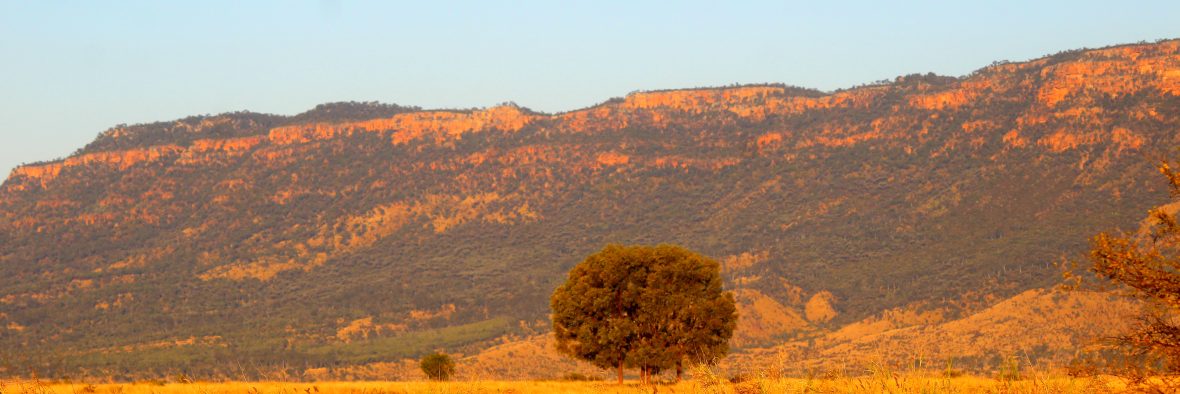
Blackwater is in the heart of the Bowen Basin, the largest coal deposit in the southern hemisphere. Not only is it in the heart, coal IS the heart (and soul) of Blackwater.
Imagine a pie cut into four pieces, representing as far as the eye can see. Two of the pieces opposite each other are the Blackwater coal mine and the Curragh coal mine. Of the other two opposite pieces, one stretches away through the scrub to the horizon, the other is dominated by a mountain range which harbours Blackdown Tableland National Park.
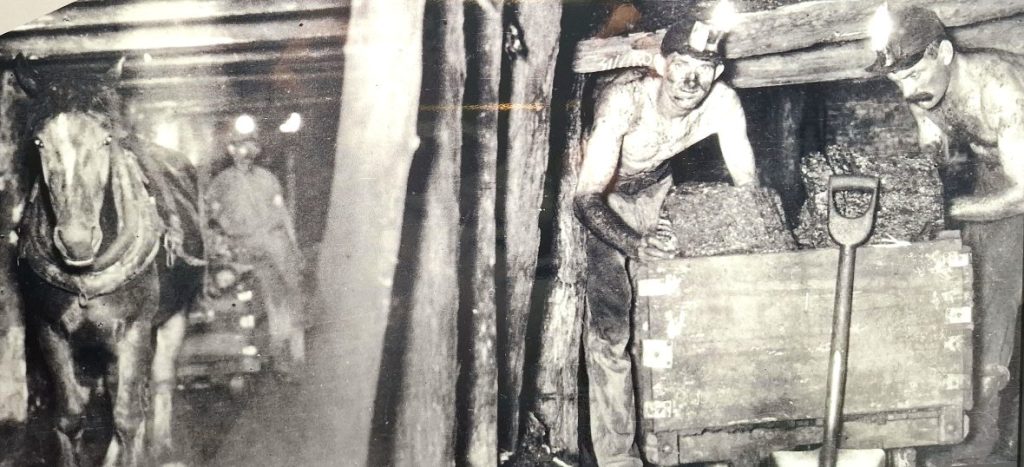
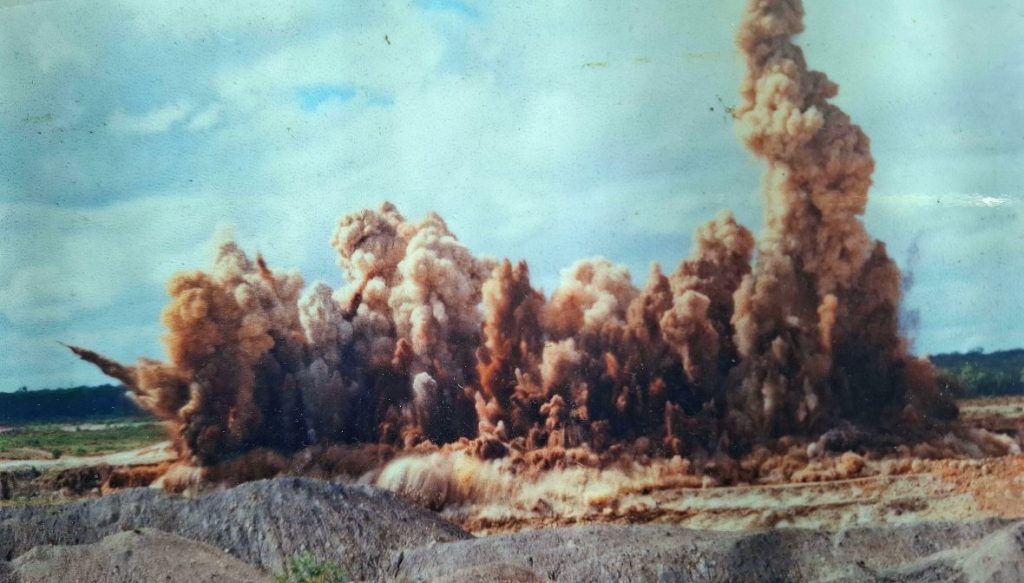
How big you ask? Of the total lease length that runs to 81klm, the seven working mine pits at the Blackwater Coal Mine stretch over 67klms. They’re 150 metres at the top, reducing to 60 metres wide at the bottom, the bottom being 150 metres deep. That’s roughly 10 square kilometres of hole. One mine. The coal trains are 100 wagons long, each carrying 100 tonnes. That’s 10,000 tons and each trainload is worth $2 million dollars. $80 million dollars rumble through Blackwater every day so that’s $29.2 billion a year.
A single photo posted somewhere on the internet got me excited even before we had arrived at Bedford Weir – rock pools carved by the aeons out of sandstone somewhere up on the Blackdown Tablelands. It involved a bit of back tracking down the Capricorn Highway to the turnoff, but with the temperature at a balmy 29 degrees, it was worth a day trip (we hoped). The climb was steep, windy and narrow. The one local’s advice about parking for large caravans was wildly exaggerated and in hindsight, wisely ignored. Tar all the way to the entrance and then good dirt from there on in.
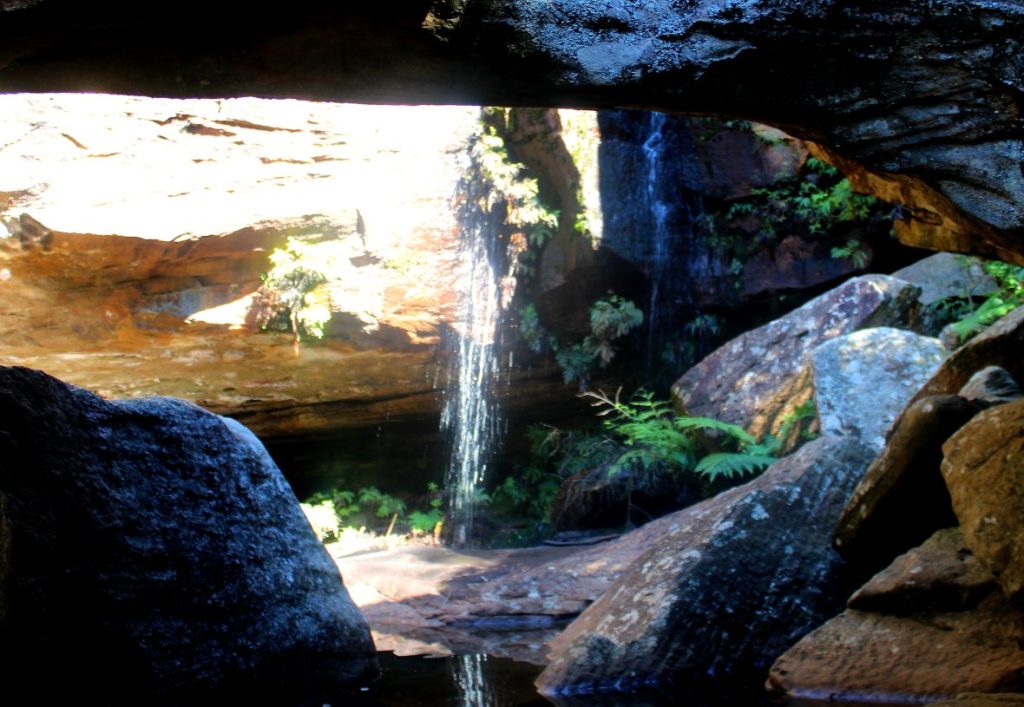
We parked and took the first trail we saw, Mook Mook, a walk to the lookout. Soon, we could hear a waterfall, but not really get a good view. Luckily the track dropped down to creek level further on and we walked back next to the creek and some boulder clambering at the very end. I think you’ll find it was worth the effort.
The lookout was only 15 minutes further on and the view was really nice, a touch of the Blue Mountains about it. The National Park had just re-opened the day before after bushfires and this meant we could drive on further at see the Rainbow Falls.
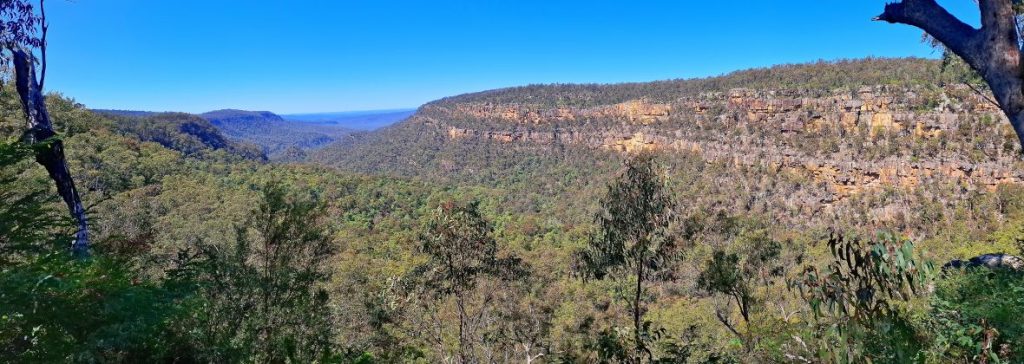
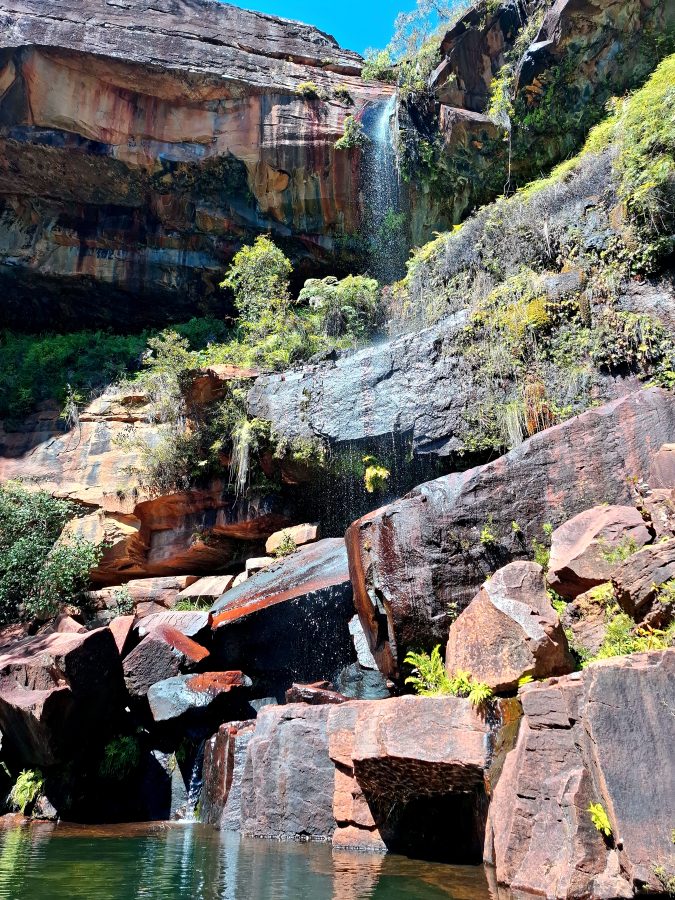
It was a couple of k’s to the climb down – 240 steps to the falls. Partially concealed from the main track but when we figured a way in, it was beautiful. I took the heroic/idiot decision to dive in, just because. Apparently, I shot out of the water like a dolphin at Seaworld. It was bloody cold!
We spent about 15 minutes just watching and listening to the falls and then climbed back up to the trail and back to the car. It could have been the end of an adventure, but I still hadn’t found what I was looking for. Something out of the corner of my eye earlier that day spurred me to revisit our first park. Sure enough, partially concealed and unsigned-posted (we found out later for indigenous cultural reasons) a large sandstone platform with plunge pools and ‘hot tubs’, created by millennia of water flow and erosion. Some were two-three metres deep and some were interconnected with underwater passages.


This was the nicest surprise of the day. The water temperature while ‘refreshing’, was not the ice bath I took earlier. Had this been our first discovery, we might not have gone further(lol).

Our last stop before leaving Blackwater the next day was to call in to the Coal Resource Centre to get some facts and figures and a coffee at the Visitor information Centre inside. We were soon leaving the Bowen Basin and headed towards The Gemfields, extinct volcanoes and undiscovered riches.

Discover more from The Toorak Tractor and a Junko
Subscribe to get the latest posts sent to your email.